The Story, Practice and Vision of Fabian Wichmann
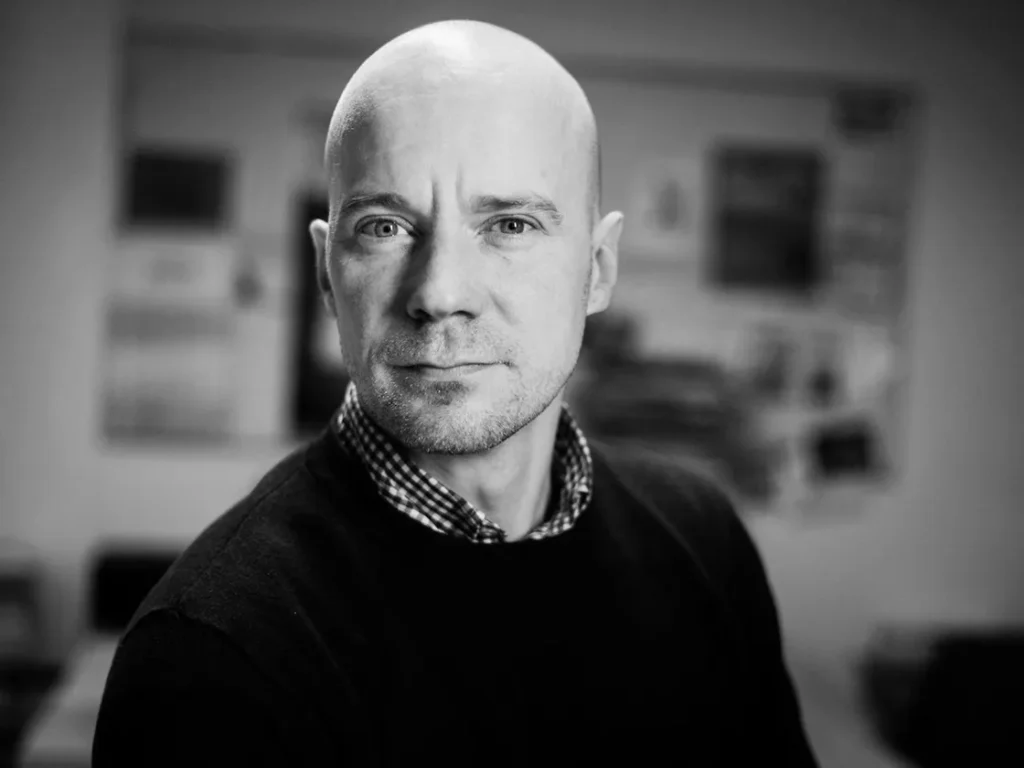
Growing up in Brandenburg and shaped by direct encounters with right-wing extremism, Fabian Wichmann has dedicated his career to disengagement, family support, and dissecting conspiracy narratives. Today, he bridges frontline practice and research while co-leading Thematic Panel 1 on Ideologies and Conspiracy Narratives within the EU Knowledge Hub.
The prevention of radicalisation and violent extremism is far more than a policy debate or theoretical framework: its true strength stems from the lived experience of practitioners working on the front line every day. Effective responses that protect our communities are built precisely at the intersection of frontline practice, rigorous research, and a deep understanding of evolving ideological dynamics. In this portrait, Fabian Wichmann (Research Associate at Grüner Vogel e.V. and Co-leader of the EU Knowledge Hub’s Thematic Panel 1 on Ideologies and Conspiracy Narratives) shares his personal and professional journey.
Tell us a bit about your background
I grew up in Brandenburg, in eastern Germany. Encounters with aggressive neo-Nazis during my youth made right-wing extremism a very tangible issue for me. Those experiences shaped my interest in how civil society can respond to intimidation and exclusion. I later studied educational science and began working with Exit-Germany in 2006, initially through an internship. My early work included Community Coaching, supporting local communities in responding to right-wing extremism. I went on to spend many years in exit counselling, family support, and public communication.
That combination has stayed with me: understanding the conditions in which extremism develops, supporting people who want to leave, and helping communities find ways to respond. It also led me into campaigning, where we explored how communication could challenge extremist narratives and make support more visible.
What does your current role involve? How does your work contribute to the prevention of radicalisation?
Since 2025, I have worked at Grüner Vogel e.V., whose counselling service, Beratungsstelle Leben, supports people affected by Islamist radicalisation, including individuals seeking to disengage and people in their social environment.
My work connects practical experience with research and professional exchange. I contribute to publications and explore questions that arise when practitioners encounter developments their existing approaches do not fully explain. My recent interests include digital youth cultures and the relationships between ideological narratives, personal circumstances, and violence.
I have also spent the past two years co-leading the EU Knowledge Hub’s Thematic Panel on Ideologies and Conspiracy Narratives with Vasileios Theofilopoulos.
I try to understand how convictions take shape through a person’s experiences and relationships, what sustains them, and where they can be questioned. In practice, this means asking what might help someone recognise contradictions and consider other ways of understanding themselves and the world.
What motivates you to work in this field?
I want to be part of a civil society that takes responsibility when people are threatened or excluded. For me, prevention also involves protecting minorities and the freedom to live differently. Working in exit counselling added another dimension to that motivation. I have seen people question convictions around which they had organised much of their lives. Leaving can mean losing relationships, status, and a familiar sense of belonging. Building a different life requires considerable effort. What stays with me is their willingness to undertake that process:to examine their own decisions, acknowledge the harm caused, and begin to act differently. Supporting them means taking both the person and their responsibility seriously.
Those experiences give me reason to hope. People can reconsider what once seemed unquestionable and develop a different understanding of who they can become. Change becomes visible in decisions and behaviour, sometimes through small steps over a long period. Supporting that process keeps me motivated.
What challenges do you face in your work and how do you address them?
One challenge is making sound judgements when a situation remains unclear. Someone may express extremist ideas alongside personal distress or a fascination with violence. We need to understand how these elements relate in the individual case and what each requires from us. These questions are particularly relevant to my recent work on digital environments and nihilistic violent extremism. Addressing them requires curiosity, careful assessment, and a willingness to revise an initial interpretation.
Cooperation presents another challenge. Counsellors, mental health professionals, and security authorities bring different responsibilities and perspectives. For cooperation to work, we need to understand those differences and know when another service needs to become involved.
There is also the challenge of time. Deradicalisation processes can involve prolonged doubt, practical dependencies, and concerns about losing an entire social environment. We need realistic expectations, regular reflection with colleagues, and enough continuity to accompany developments that do not follow a predictable timetable.
How do you think collaboration across Europe helps prevent radicalisation more effectively?
European cooperation helps me question what I might otherwise take for granted. A colleague from another country may recognise a development I have only begun to notice, or explain why an approach that seems convincing in Germany would face different obstacles elsewhere. I remember discussing the radicalisation of minors and young people at our first panel meeting. We came with different professional backgrounds and national experiences. As trust grew within the group, we were able to discuss uncertainty and disagreement more openly. For me, that is an important part of the EU Knowledge Hub’s value. Practitioners can bring questions from their daily work into a wider discussion, while perspectives from research and policy can help place those observations in context. The practical test comes afterwards: can colleagues take something useful back into their own work? That requires explaining the conditions behind an approach and considering how it might need to change in another setting.
What advice would you give to someone new to this field?
Take time to understand the person and the situation in front of you. Knowledge of ideologies and extremist structures matters, and so does listening carefully enough to discover where your first interpretation was incomplete. Find colleagues with whom you can discuss difficult decisions. Being able to say “I am unsure” is part of working responsibly.
I would also encourage people to stay creative. Working with colleagues on campaigns taught me that familiar situations can sometimes be approached differently. In Wunsiedel, for example, a neo-Nazi march generated donations for exit work, changing the meaning of the event and giving local people another way to respond.
Creativity needs a clear purpose. Ask whom you want to reach, what you hope to achieve, and how you could assess the outcome. Attention can create an opening; helping someone change requires further work.
What do you do outside of work to stay inspired?
I enjoy creative work in all sorts of forms, from graphic design and drawing to painting and printmaking. That can mean filling a notebook with drawings or painting the walls of our guest bathroom. I am always curious about different techniques and what I could try next.
Much of my professional work deals with difficult subjects and leaves limited room for that kind of open-ended experimentation. Making things helps me clear my head. It also gives me space for the small, beautiful things that can otherwise get pushed aside.
That all sounds quite lovely, of course. In reality, I sometimes just sit on the sofa, binge-watch action series, and do absolutely nothing else.
To conclude, what inspires you to keep working in this field, and what is your hope for the future of radicalisation prevention in Europe?
The people I work with give me reasons to continue: colleagues who remain thoughtful in difficult circumstances and people who undertake the demanding process of changing their lives. I hope prevention becomes a more dependable part of our societies’ response to extremism. People need to know where they can find help. Practitioners need continuity, opportunities to learn, and reliable cooperation with other services. We also need social spaces where people can encounter different perspectives and question ideas they have come to regard as self-evident.
I would like us to judge European cooperation by whether knowledge reaches the places where decisions are made: a counselling conversation, a school, or a local community facing intimidation.
My aim remains close to what brought me into this work. I want a society in which people can live without fear of being targeted for who they are, and in which those who take responsibility and leave extremism behind have a real opportunity to build a different life.
Originally published at European Commission.